Pistol Safeties: Types, How to Use Them
Whether you’re buying a new handgun or you’re just a new gun owner, the
first thing you probably want to know is how each safety mechanism
works on the firearm you’re handling. We’re covering all the ones you
might encounter, so you know how to use them before you handle them.
Types of Handgun Safeties
External (Manual) Safeties
The most important aspect of handling any firearm is understanding how
all manual safety functions work. Your handgun will always have one or
more of the below manual safeties:
Lever / Thumb Safety
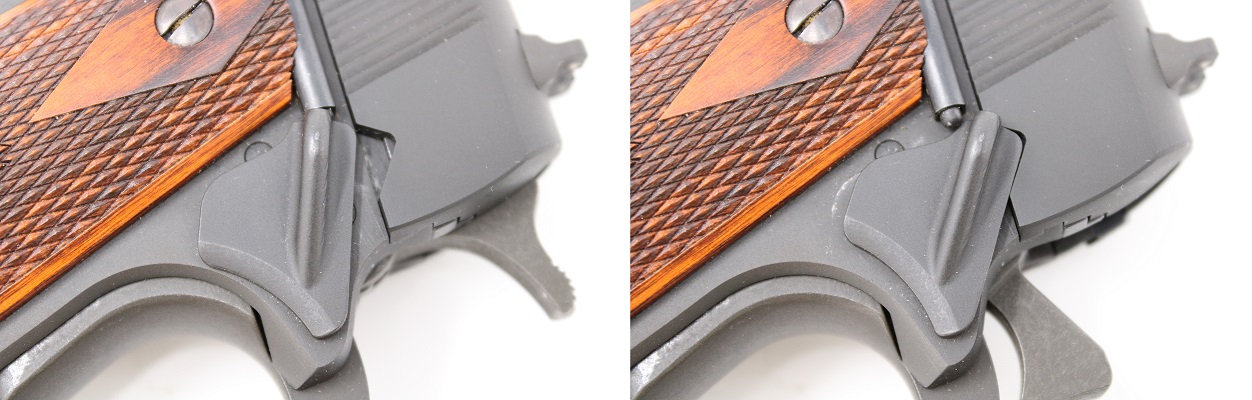
The most common safety on most handguns. The lever safety acts as a
simple external thumb “switch” that prevents the firing pin or the
trigger from moving or, in some cases, both. On this 1911, the thumb
safety is shown to the left of the hammer. The hammer must be cocked to
engage the safety on most single-action handguns. On double-action and
striker-fired handguns, the thumb safety can typically be engaged at any
time.
Grip Safety
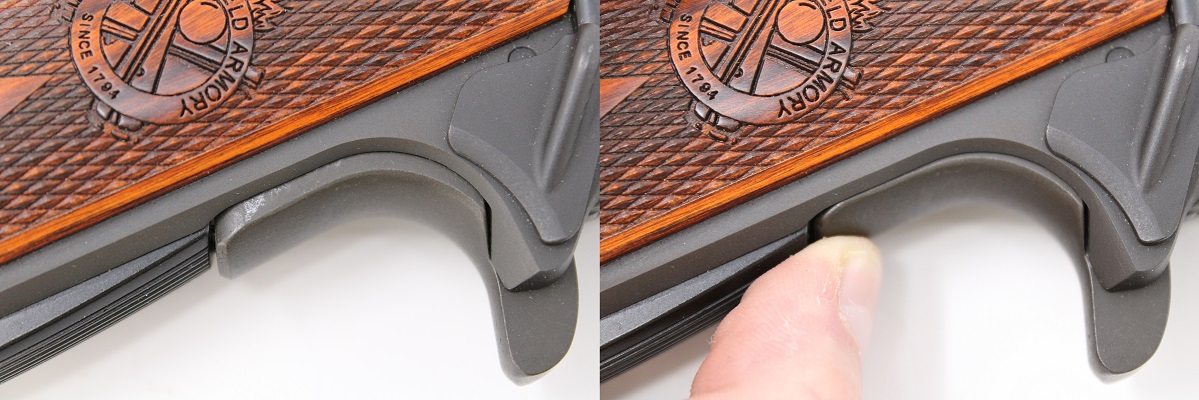
The grip safety is always engaged when the handgun isn’t held in the
hand. It disengages when the shooter grasps the pistol grip and
depresses the safety lever with the palm. Grip safeties prevent an
accidental discharge of a handgun by preventing the trigger from being
depressed unless the firearm is properly held by the shooter, even if
the thumb safety is off.
Trigger Lever Safety
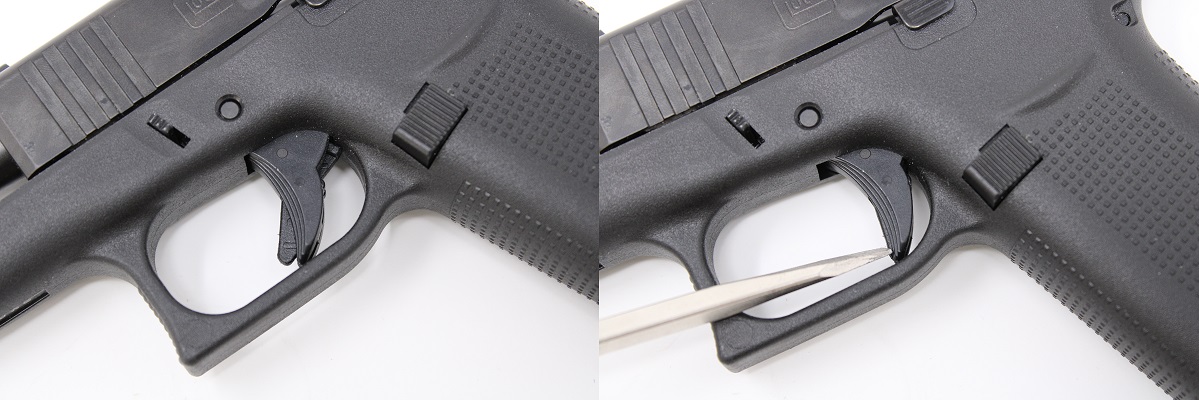
Trigger safeties function like grip safeties. They’re engaged when the
trigger finger isn’t actively depressing the safety lever. Like grip
safeties, the this safety is meant to prevent an accidental discharge
when the firearm isn’t held in the hand. If part of the trigger were to
snag on a holster, belt loop, or fabric, the chance of the handgun
firing is much lower. For the trigger to release the striker or hammer,
the safety must be pressed fully into the trigger bow.
De-cocker
You’ve probably seen a few action films where a shooter de-cocks their
handgun’s exposed hammer by holding it with the thumb and slowly
depressing the trigger. This is dangerous and violates one of the four
rules of gun safety: Keeping your finger off the trigger unless you’re
ready to fire. De-cocking levers replace this unsafe action with a
mechanical way to lower the hammer without letting off a chambered
round. This eliminates the risk of the hammer slipping from the thumb
and striking the firing pin, and causing an accidental discharge.
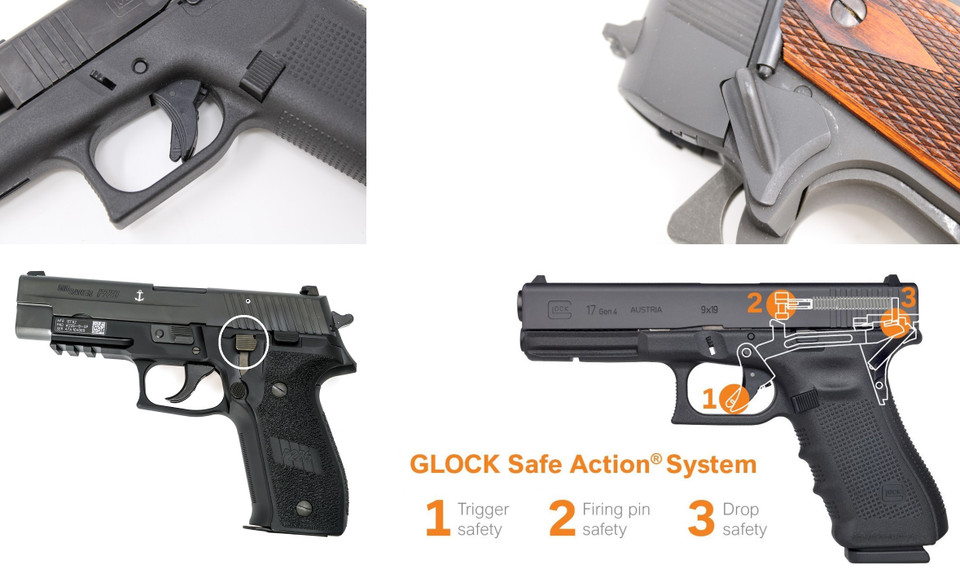
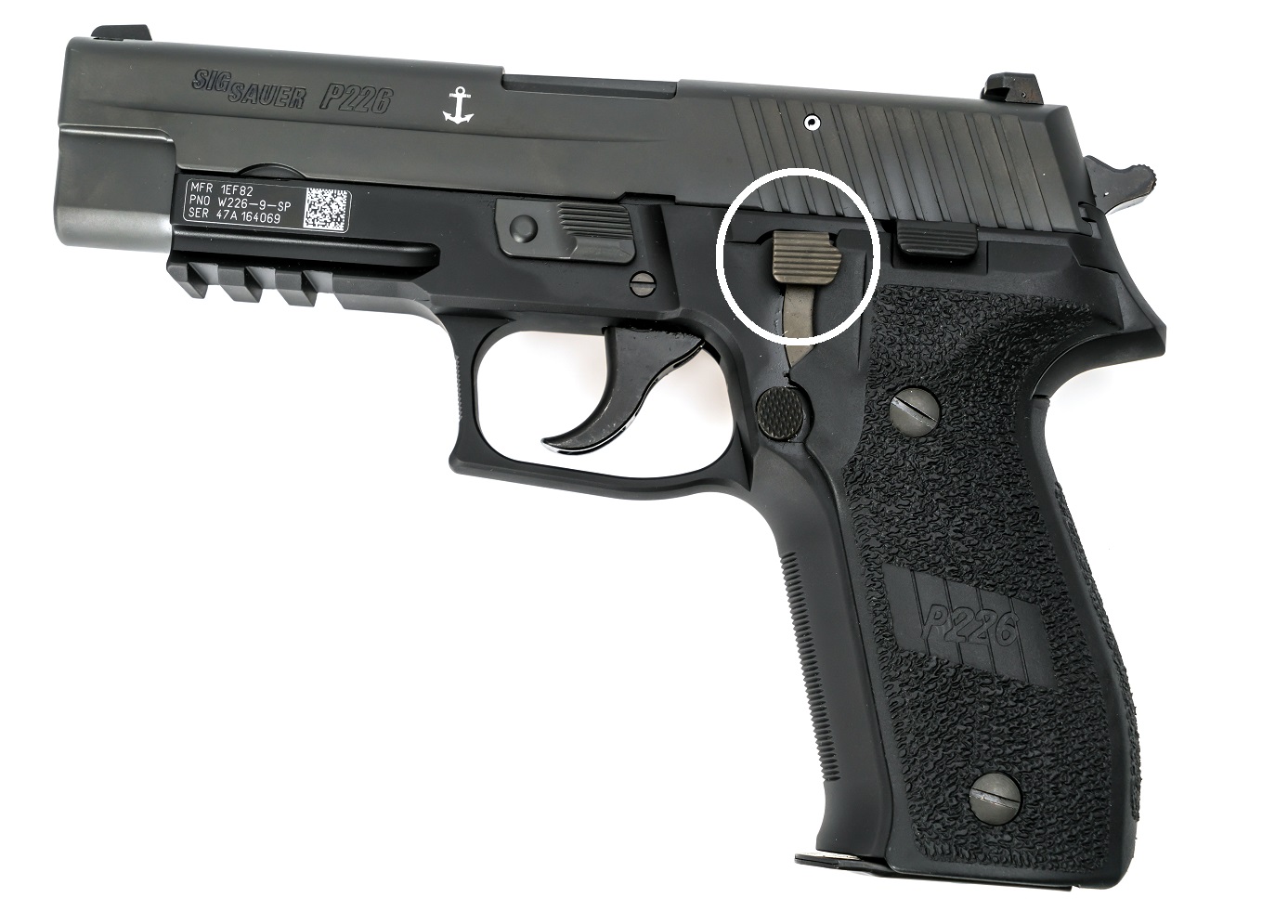
On this Sig Sauer P226, the decocker is above the magazine release
button, circled in white. Handguns with this safety feature will
typically have three buttons on the slide: One for the slide lock, one
for the thumb safety, and another for the decocker. If your handgun
doesn’t have a de-cocker, remove the magazine and rack the slide to
remove any round from the chamber. Only then should you manually un-cock
the weapon by pulling the trigger while thumbing the hammer.
Slide Lock
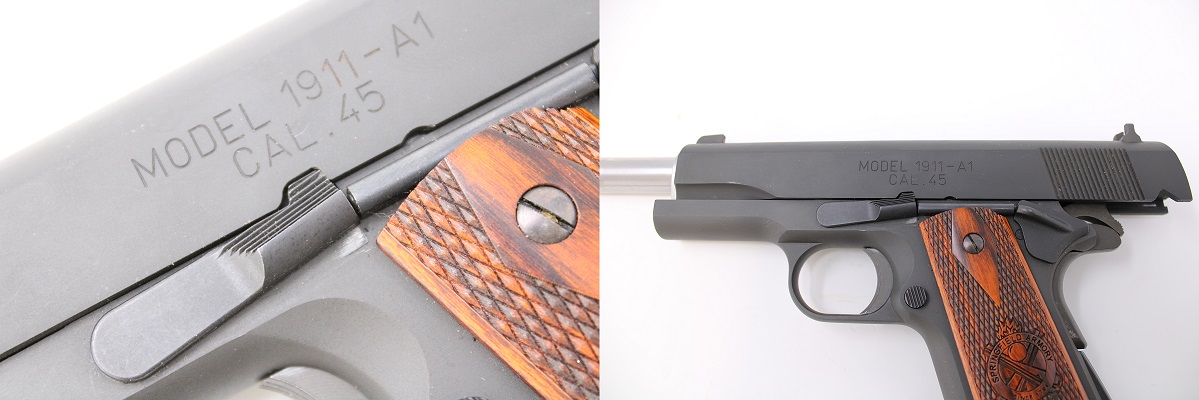
Although technically not a safety feature meant for use while carrying
or firing your handgun, a slide lock makes a firearm inoperable and safe
to handle. The lock is a button or lever, usually placed above the
trigger, which locks the slide rearward, exposing the chamber and
internals. Slide locks are automatically engaged when the last round is
fired and the inserted magazine is empty.
Internal (Automatic) Safeties
Internal safeties automatically engage and disengage with the pull of
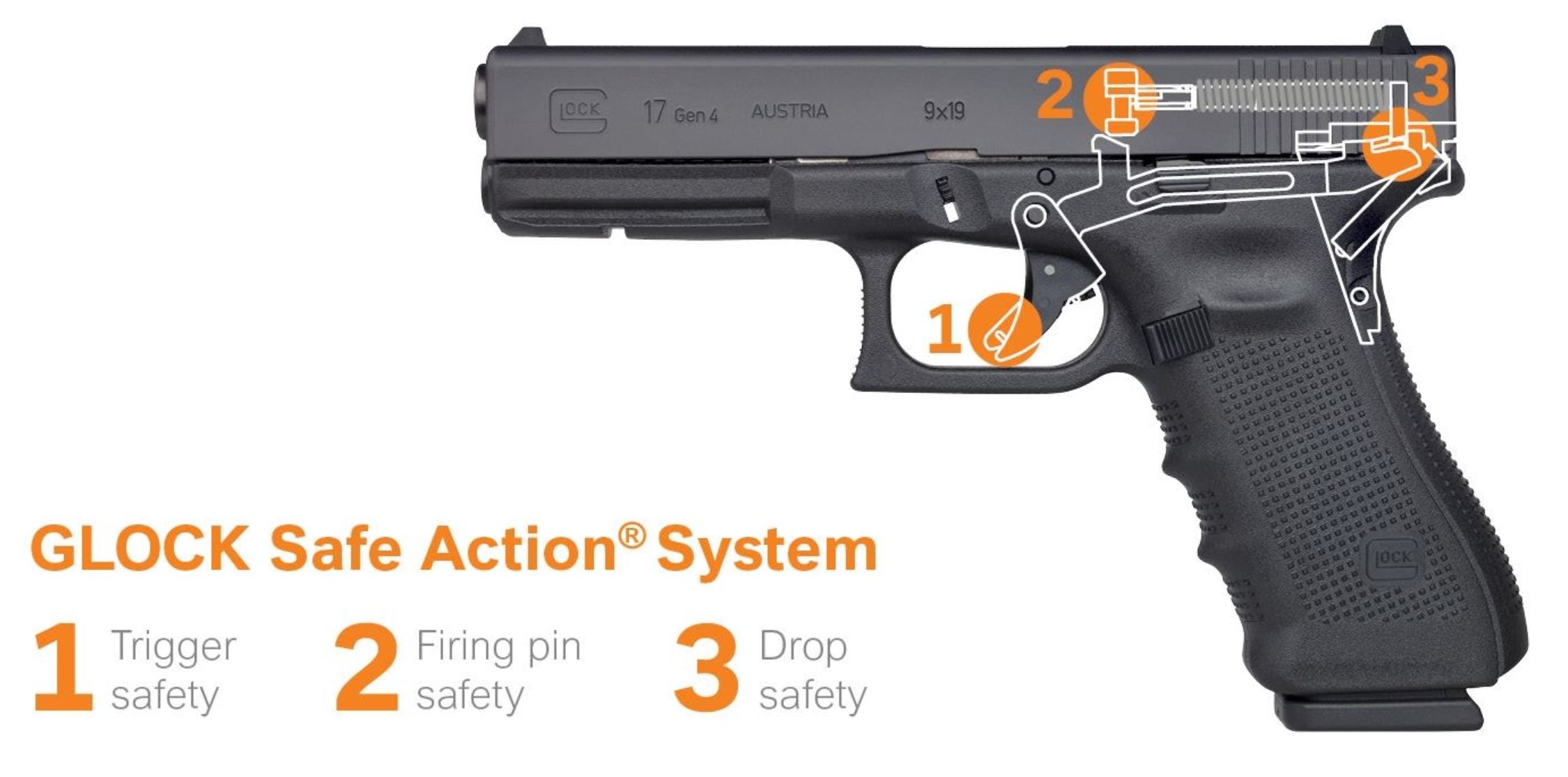
the trigger and don’t need to be manually switched on or off. The GLOCK
series of handguns are famous for their various internal safeties, which
eliminates the need for external safeties, save for the trigger safety.
Drop safety
Some states, like California, require drop safeties on all new
handguns. A drop safety locks up the firing mechanism inside the
receiver or frame to prevent a round in the chamber from being
accidentally detonated if the weapon is physically dropped on the ground
and the firing mechanism is jarred by the impact. Drop safeties are
typically built into the rear of the slide, near the striker or hammer,
where the handgun is most likely to land because of its center of
gravity.
Firing Pin Safety
The firing pin safety is essentially a type of drop safety. It prevents
the pin from ever striking the primer on a chambered round unless the
trigger is pulled. In the event of a drop or mechanical failure, the
firing pin will not be able to strike the chambered round’s primer. It
will instead be blocked by a bar or plate. This physical block can only
be moved by the trigger being depressed by the shooter.
Hammer Block
The hammer block works like a firing pin safety: It uses a physical bar
or plate to prevent the hammer from striking the firing pin unless the
trigger is pulled. If the hammer were to ever come down unintentionally –
either because the weapon was dropped, or because of a faulty sear
mechanism – the hammer block will prevent it from striking the head of
the firing pin if the trigger isn’t also being depressed to remove the
block at that moment.
Transfer Bar
A transfer bar functions opposite to a hammer block: As the trigger is
pulled, it moves a small bar with a strike face in front of the head of
the firing pin. The hammer must hit this strike face instead of the
firing pin directly. The bar transfers the hammer’s energy to the head
of the firing pin, detonating the primer on round in the chamber. If the
trigger isn’t pulled and the hammer falls, the transfer bar will not
spring into position. The hammer will instead strike the frame or slide
of the weapon, avoiding the firing pin entirely.
Magazine Disconnect
The magazine disconnect works by blocking the trigger from being pulled
when the magazine is removed from the handgun. This is meant to prevent
an accidental discharge of a round left in the chamber after the
magazine is removed. It’s a controversial type of automatic “safety”
that most gun owners find to be a hindrance. This disconnect is
unnecessary if the person handling a firearm exercises the rules of gun
safety: Never pull the trigger unless you’re ready to fire, and always
treat every firearm as if it is loaded.
California requires new handguns to have magazine disconnects. Some gun
makers and politicians argue that a gun owner might assume their weapon
is empty if the magazine is removed, and that they may pull the trigger
with a round still in the chamber. This logic again violates the basic
rules of gun safety and inhibits the responsibility that all gun owners
must maintain. We believe gun owners should be taught to handle firearms
safely.
Other Safety Features
Loaded Chamber Indicator
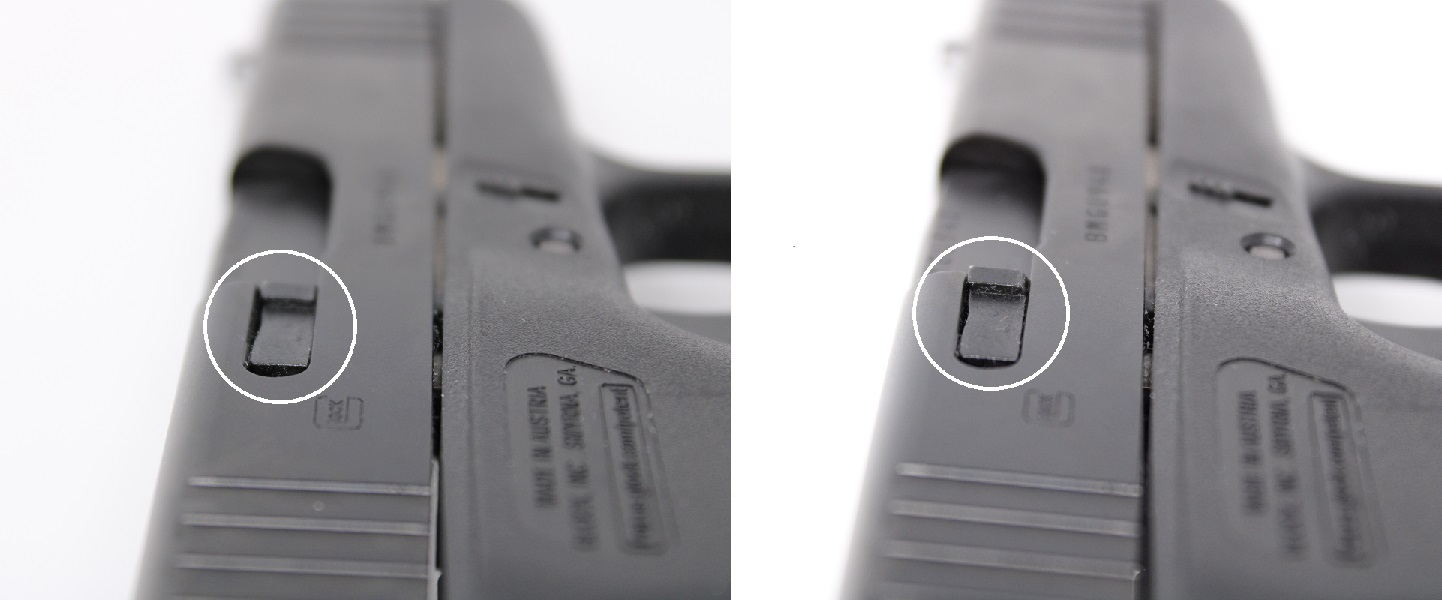
An LCI shows when a round is in the chamber, helping the shooter to
know the weapon needs to be unloaded before handling. These indicators
are usually built into the side or rear of the slide, like on this Glock
43. With a round in the chamber, a small metal bar behind the ejection
port is raised outward, which can be easily seen when the weapon is
aimed downrange.
Half-Cock or Hammer Safety
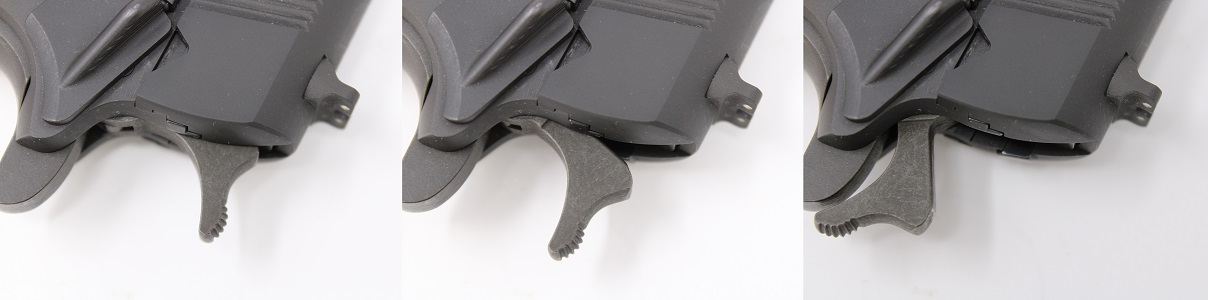
A half-cocked hammer removes the face of the hammer from the head of
the firing pin. It locks up the trigger, preventing it from being
pulled. In this state, the hammer cannot be dropped and must instead be
fully cocked and then released, either with a de-cocker or by pulling
the trigger. This is advertised as a type of manual safety by some gun
makers, but we do not recommend carrying your weapon loaded and
half-cocked.
The mechanism that holds the hammer in this position can be easily
damaged if dropped, and it is not designed to be held in this position
repeatedly or for long periods of time. If the weapon is dropped
half-cocked, there is typically enough energy stored in the hammer
spring that, if it were to release, could ignite a chambered round.
Recap
- The most common handgun safeties include the thumb, trigger, and grip safety.
- Many modern handguns have automatic safeties to prevent accidental discharges.
- Automatic safeties cannot be switched on or off. They usually function with the trigger.
- Engaging the slide lock is usually the safest way to unload and handle a handgun.
- We recommend against carrying any handgun with a half-cocked hammer.
- Never manually de-cock a hammer on a handgun without first emptying the chamber.
- A handgun with a de-cocking lever can be safely un-cocked with a round in the chamber.